
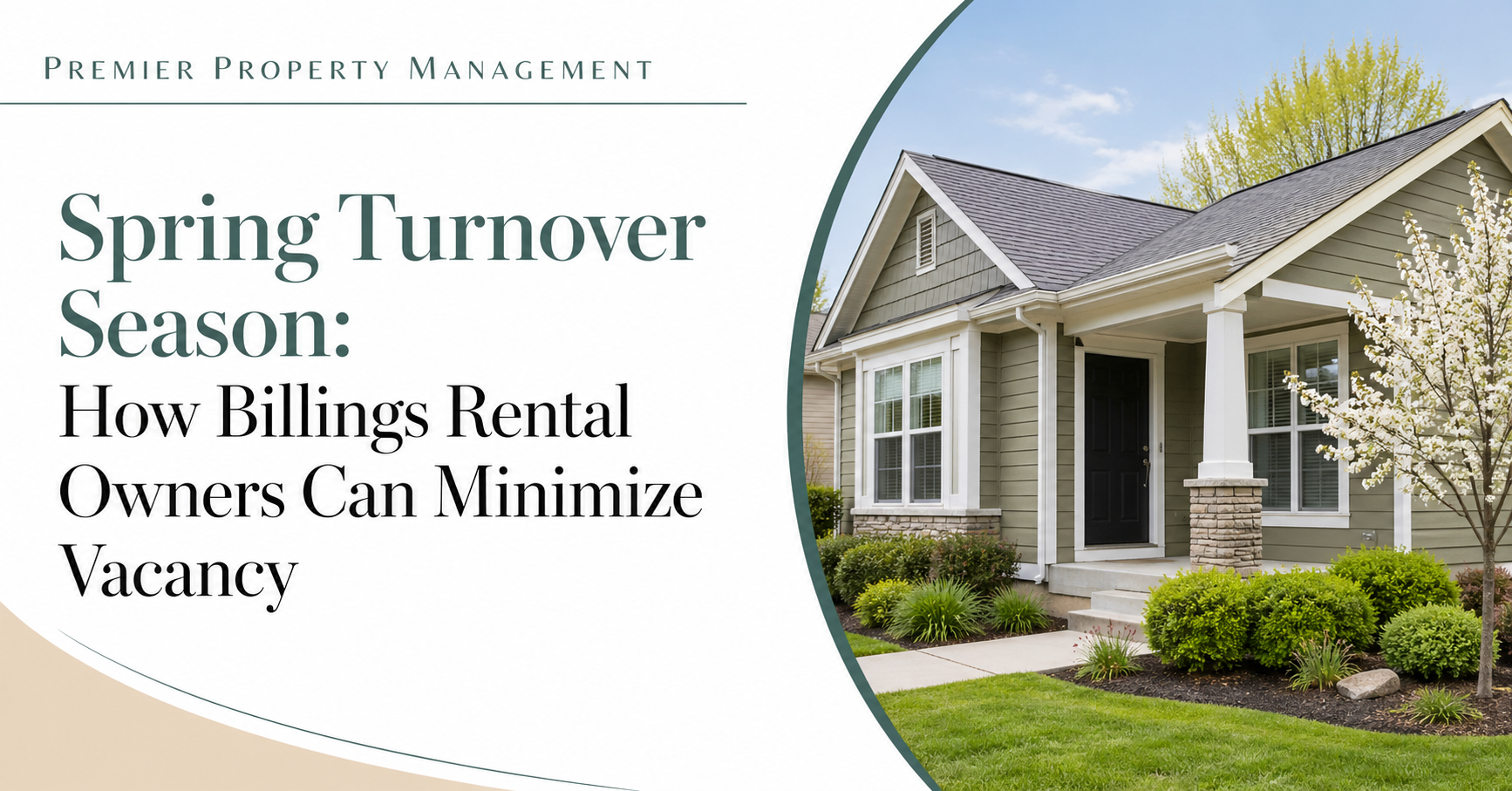
In Billings, May is not just warmer weather — it is decision season for rental owners.
The choices you make this month can determine whether your property sits vacant for weeks or fills quickly with a qualified tenant. Spring brings more renters into the market, but it also brings more competing listings. That means pricing, presentation, timing, and responsiveness matter more than ever.
For many rental owners, vacancy feels like a normal part of owning an investment property. And while some vacancy is expected, extended vacancy is expensive. A property sitting empty for two, three, or four extra weeks can quietly eat into your annual return.
The good news? Vacancy is not always random. In many cases, it can be reduced with the right leasing strategy, proactive preparation, strong marketing, and quick decision-making.
If you own a rental property in Billings, MT, spring is one of the most important times of year to pay attention to your leasing plan.
Why Spring Turnover Season Matters in Billings
Spring and early summer tend to bring more movement in the rental market. Families may want to move before the next school year begins. Professionals may relocate during warmer months. Tenants are often more willing to schedule showings when the weather improves and moving feels more manageable.
That can be good news for rental owners.
More renter activity can mean more eyes on your listing, more showing requests, and a larger pool of potential applicants. But there is another side to that.
More activity also means more competition.
During the spring turnover season, tenants usually have more options to compare. They may be looking at several rentals in Billings MT at the same time. They are comparing price, photos, location, condition, amenities, and how easy it is to schedule a showing.
So while spring can be a great time to lease a property, it is not a guarantee that every rental will fill quickly.
A well-priced, clean, professionally marketed property may move fast. A property that is overpriced, poorly photographed, hard to show, or not quite ready can sit longer than expected.
That is why spring leasing strategy matters. The owners who win during this season are usually not the ones who simply “put it out there and see what happens.” They are the ones who prepare early, understand the competition, and respond quickly when the market gives feedback.
The Real Cost of a 2–4 Week Vacancy
Vacancy does not always feel expensive right away because there is not a bill that says “vacancy cost.” But the cost is real.
Let’s keep the math simple.
If your rental property rents for $1,800 per month, then:
A two-week vacancy costs roughly $900 in lost rent.
A four-week vacancy costs roughly $1,800 in lost rent.
And that is just the rent.
You may also have additional costs during that time, such as utilities, lawn care, cleaning, maintenance, advertising delays, and the administrative time it takes to keep managing the vacancy.
This is where many owners unintentionally lose money. They may hold out for a slightly higher rent, but if that price causes the property to sit vacant for several extra weeks, the math may not actually work in their favor.
For example, let’s say an owner wants to rent a property for $1,900 instead of $1,800.
That extra $100 per month equals $1,200 over a full year.
But if holding out for that higher rent causes one extra month of vacancy, the owner may lose $1,800 in rent right away — not counting utilities, maintenance, cleaning, and other carrying costs.
That does not mean you should always price low. It means you should price strategically.
A smart leasing strategy is not just about getting the highest rent possible. It is about getting the right rent, from the right tenant, in the right timeframe.
Pricing vs. Speed: What Actually Gets Units Filled Faster
One of the biggest mistakes rental owners make is assuming that “testing the market” has no downside.
Sometimes testing a higher price can make sense, especially if the property is in great condition, has strong features, and comparable rentals support the number. But in a competitive spring market, tenants can move quickly. If your property is priced too high, they may simply skip it and apply somewhere else.
The market usually gives feedback fast if you know what to watch.
If your rental listing is live and you are not getting inquiries, that may be a pricing or presentation problem.
If you are getting inquiries but not showings, there may be an issue with availability, listing details, location, or tenant perception.
If you are getting showings but no applications, the price may not match the property condition, layout, or overall experience.
This is where good Billings property management becomes more than just putting a sign in the yard or posting a listing online. It requires watching the data and responding quickly.
A slightly aggressive price may be reasonable for the first few days. But if lead flow is low, waiting too long to adjust can cost you. The longer a property sits, the more tenants may wonder why it has not been rented.
The goal is not to panic and drop the rent too quickly. The goal is to pay attention.
A strong leasing process should track how many people are viewing the listing, how many inquiries are coming in, how many showings are being scheduled, what feedback prospects are giving, and whether applications are being submitted.
Pricing should not be based only on what the owner wants or what the property rented for last year. It should be based on current market conditions, property condition, time of year, and competing listings.
That is especially true in spring, when the market can shift quickly.
Why Professional Marketing Matters More in Spring
Spring listings are visual.
Tenants are scrolling fast. They are comparing your property to others online before they ever schedule a showing. That means your photos, headline, description, and showing process matter.
A good rental can look average with bad photos.
A clean property can look neglected with poor lighting.
A spacious property can feel small if the photos are taken from the wrong angles.
And a great property can get overlooked if the listing description is vague or missing important details.
Professional rental marketing does not need to be complicated, but it does need to be intentional.
A strong listing should include bright photos, a clean and accurate headline, rent amount, bedroom and bathroom count, square footage if available, key selling points, pet policy if applicable, parking details, laundry details, utility information, clear showing instructions, and a video tour when possible.
Tenants want information quickly. If they have to work too hard to understand the property, they may move on to the next listing.
This is especially important when there are multiple Billings rental property options available at the same time. The listings that are clean, clear, and easy to act on often have the advantage.
The showing process matters too.
If a tenant is interested but cannot easily schedule a showing, you may lose them. If they have to wait too long for a response, they may apply somewhere else. If the property is not clean or ready when they arrive, the first impression is already damaged.
In a busy leasing season, speed and presentation work together. You need strong marketing to create interest. Then you need a smooth process to turn that interest into showings and qualified applications.
The Property Needs to Be Rent-Ready, Not Just Available
There is a big difference between a property being empty and a property being ready.
A rental may technically be available, but if it still needs cleaning, repairs, photos, or pricing adjustments, it is not truly rent-ready.
Tenants notice when a property feels rushed.
They notice dirty baseboards, worn paint, broken blinds, missing lightbulbs, clutter, odors, and unfinished repairs. These things may seem small to an owner, but to a prospective tenant, they create doubt.
They may wonder:
Will maintenance be handled well?
Does the owner care about the property?
Is this rental worth the price?
Would I be proud to live here?
This does not mean every rental needs luxury finishes. Many tenants are not expecting perfection. But they are expecting clean, functional, and cared for.
Before listing a rental, owners should ask:
Would this property photograph well today?
Would I feel confident showing it today?
Does the rent match the current condition?
Are there any obvious issues that would make a qualified tenant hesitate?
If the answer is no, it may be worth taking a few extra days to prepare the property correctly rather than rushing it to market and letting it sit.
What Most Owners Get Wrong
Most owners do not lose money because they do not care.
They lose money because they wait.
They wait to start planning until the tenant has already moved out.
They wait to schedule cleaning.
They wait to make small repairs.
They wait to take photos.
They wait to adjust the price.
They wait to respond to market feedback.
They wait until the listing has already been sitting before they ask what needs to change.
That waiting adds up.
A few days here and a few days there can easily become two or three weeks of lost rent. And once a property has lost momentum, it can be harder to regain attention.
The best leasing results usually come from preparation before the property is vacant.
That means the plan should begin as soon as the current tenant gives notice.
You should already be thinking about what repairs are needed, whether touch-up paint is required, whether flooring or cleaning needs to be scheduled, when photos can be taken, what rent price makes sense, how soon the property can be marketed, how showings will be handled, and what comparable properties are currently listed.
The owners who minimize vacancy are usually not the ones who get lucky. They are the ones who prepare early and make decisions quickly.
How to Know If Your Listing Is Not Working
One of the benefits of online rental marketing is that it gives feedback quickly.
If your listing is not performing, there are usually signs.
You may have a problem if you are getting very few inquiries, people are viewing the listing but not scheduling showings, prospects are asking if the price is negotiable, showings are happening but no one is applying, you are getting mostly unqualified leads, comparable properties are leasing faster, or the property has been listed for more than a week with little activity.
This is where owners need to be honest.
Sometimes the issue is price.
Sometimes it is condition.
Sometimes it is the photos.
Sometimes the property is harder to show than it should be.
Sometimes the listing is missing information tenants care about.
And sometimes the rental is simply competing against better-presented properties at similar price points.
The sooner you identify the problem, the sooner you can fix it.
Waiting 30 days to make a change can be expensive. In many cases, you should know within the first several days whether the market is responding.
Action Steps for Billings Rental Owners
If you have a rental coming available this spring, here are a few practical steps to help reduce vacancy.
1. Start planning before the tenant moves out
Do not wait until the unit is empty to create a plan. As soon as notice is given, start thinking through repairs, cleaning, pricing, photos, and marketing.
2. Schedule cleaning and repairs early
Vendors get busy in spring. If you know the property will need work, get on the schedule as early as possible. Even small delays can push your listing back.
3. Price based on current competition
Do not rely only on last year’s rent or what you hope the property is worth. Look at current rentals in Billings MT that are similar in location, size, condition, and features.
4. Invest in better photos and listing details
Photos matter. So does the description. Your online listing is often the first showing. Make sure it gives tenants a reason to take the next step.
5. Make showings easy
If tenants cannot easily see the property, they may move on. A smooth showing process can make a big difference during a competitive season.
6. Watch lead flow in the first 3–5 days
The first few days can tell you a lot. If the listing is getting little interest, do not ignore it. Review the price, photos, description, and competition.
7. Adjust quickly if the market is not responding
A small adjustment early can prevent a bigger loss later. The goal is to protect your annual return, not just hold out for a perfect number.
Spring Leasing Rewards Owners Who Are Proactive
May can be a strong leasing month in Billings, but it rewards owners who are prepared.
More tenant activity does not automatically mean your property will lease quickly. The rentals that stand out are usually the ones that are clean, priced correctly, marketed well, and easy to tour.
Vacancy is one of the most expensive parts of owning a rental property, but it is also one of the areas where strategy can make a meaningful difference.
If you have a property coming available this spring, now is the time to make a plan.
Not after the tenant moves out.
Not after the listing has been sitting.
Not after you have already lost two weeks of rent.
A smart spring leasing strategy can help you reduce downtime, attract better applicants, and protect your rental income.
At Premier Property Management, we help Billings rental owners reduce vacancy by preparing early, pricing strategically, and marketing properties with the urgency the season requires. If you have a rental coming available this spring, our team can help you create a plan before it starts costing you money.